Filtered Out: Bilateral Macronodular Adrenal Hyperplasia Hidden by Chronic Kidney Disease (#423)
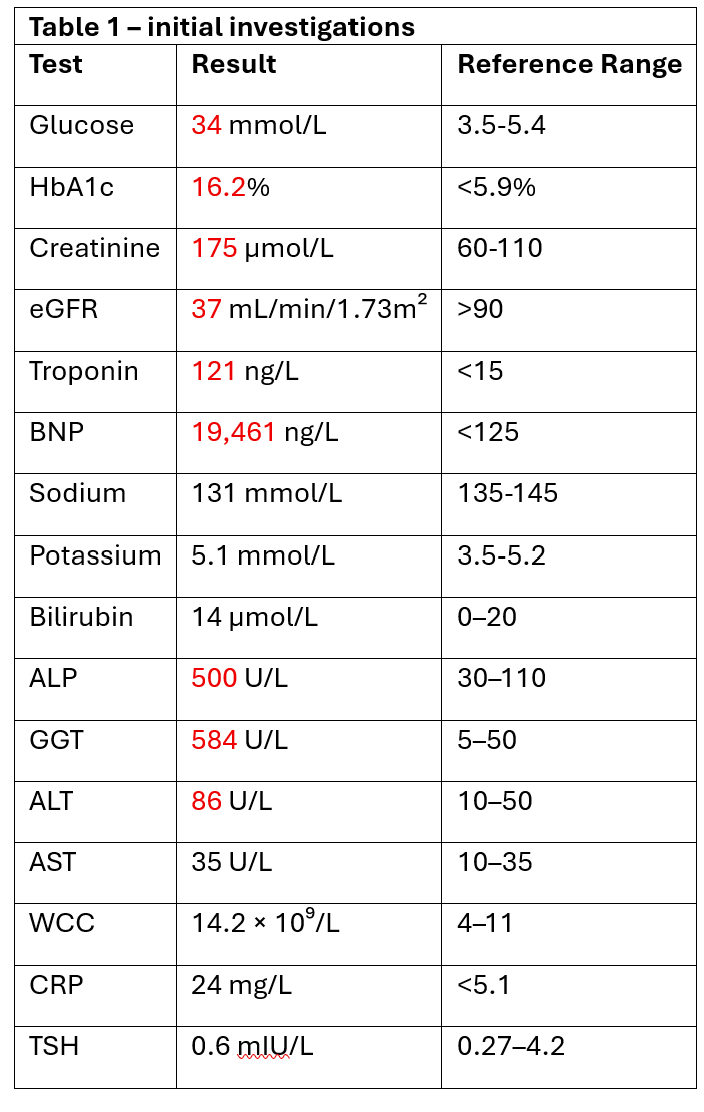
Bilateral macronodular adrenal hyperplasia (BMAH) is a rare cause of ACTH-independent Cushing's syndrome characterised by indolent hypercortisolism despite progressive cardiovascular and metabolic morbidity. We report a 56-year-old man with no known medical history, no regular medications and no medical follow-up for over 20 years who presented with marked hypertension (249/158 mmHg), acute decompensated heart failure, occipital stroke, severe hyperglycaemia with new type 2 diabetes and acute-on-chronic kidney disease.
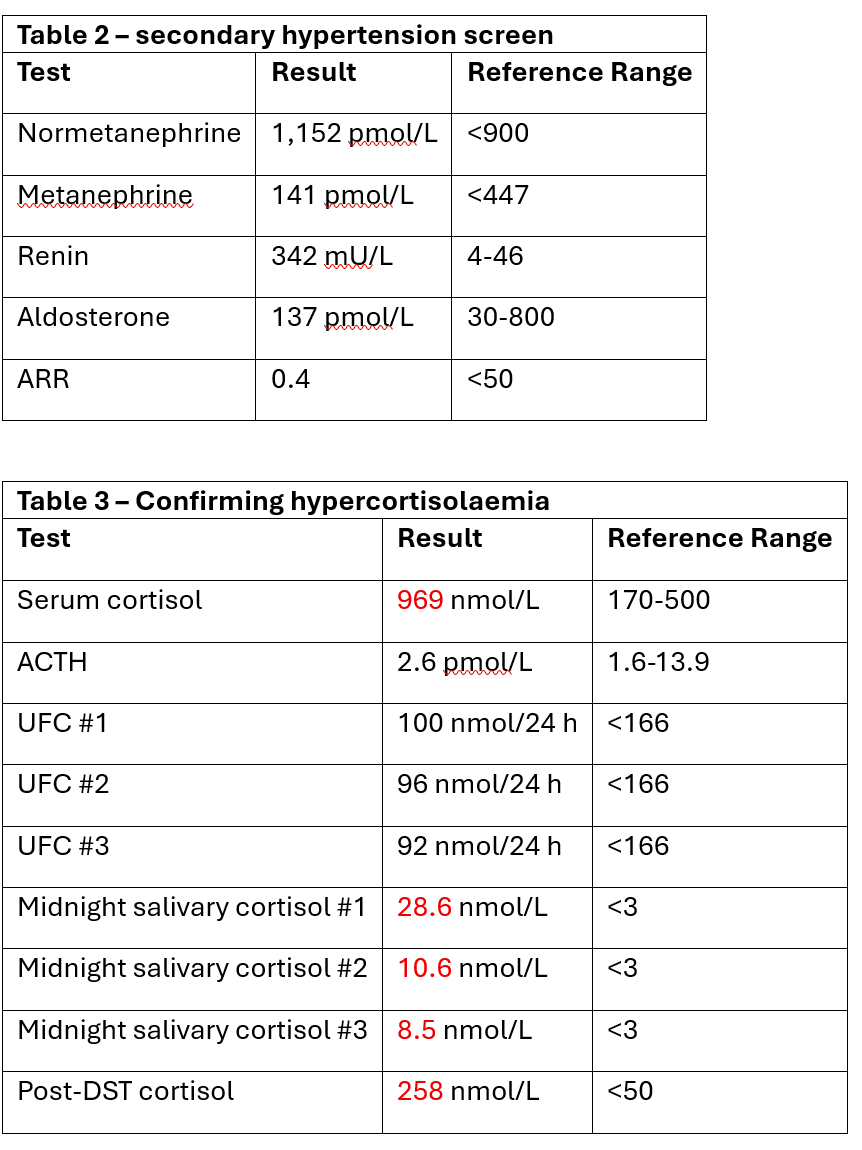
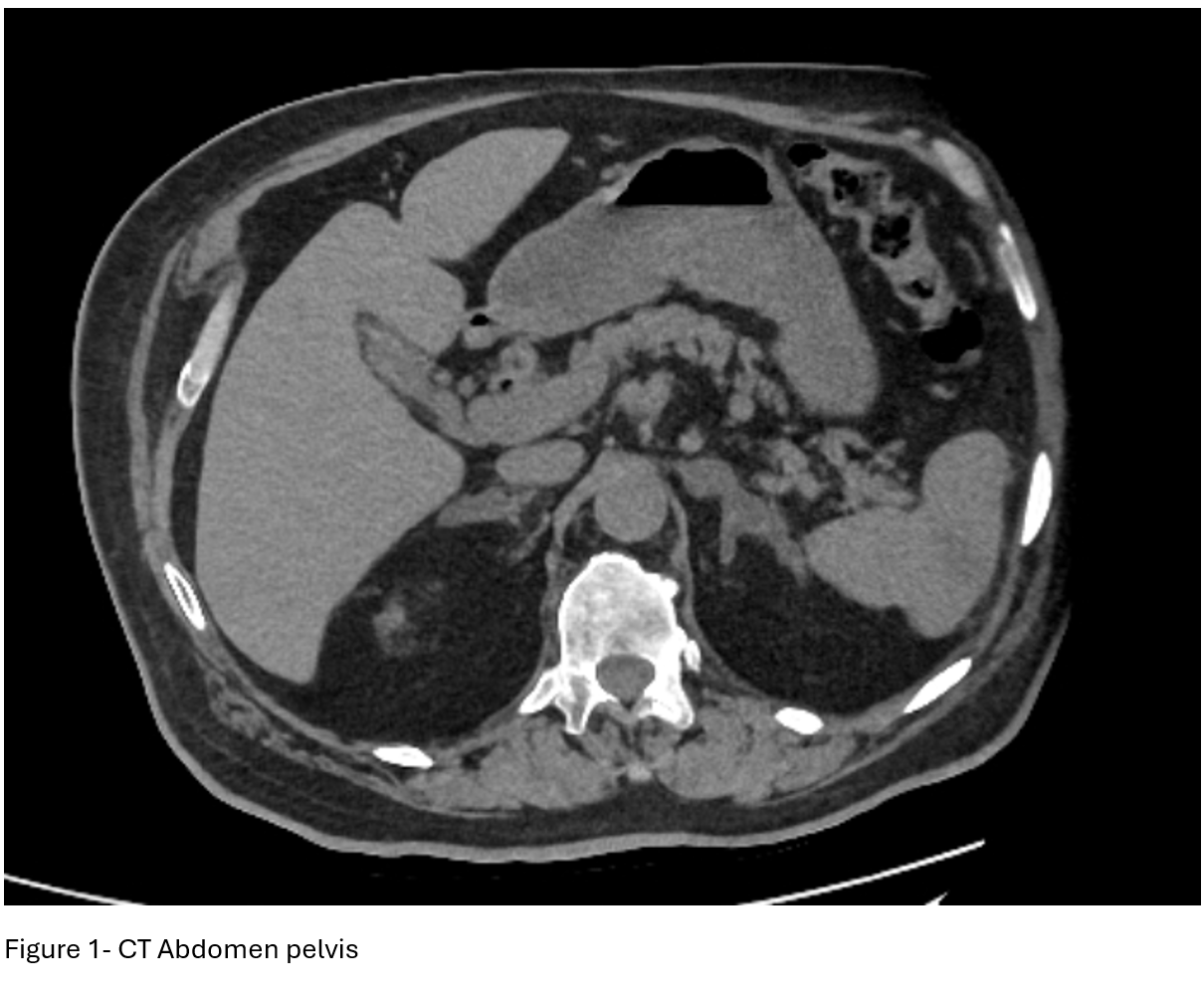
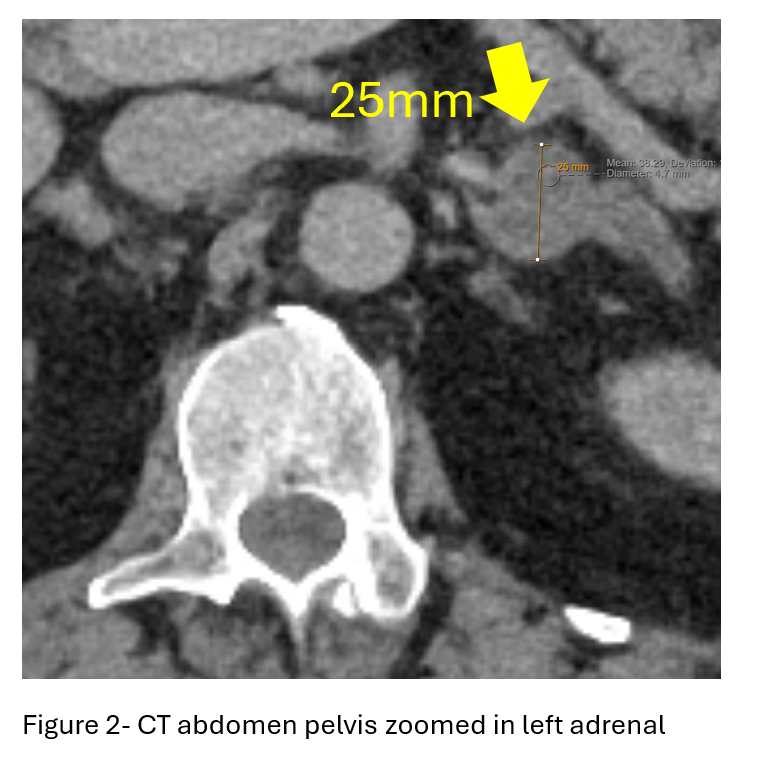
Despite profound cardiovascular and metabolic morbidity, classical cushingoid features were absent. Investigation for secondary causes of hypertension included three 24-hour urinary free cortisol (UFC) collections, all within the reference range. However, the severity of the clinical presentation and discordance between the biochemical findings and clinical phenotype prompted further evaluation with late-night salivary cortisol and overnight dexamethasone suppression testing, demonstrating loss of circadian cortisol rhythm and failure of cortisol suppression. ACTH was suppressed (2.6 pmol/L), while computed tomography demonstrated bilateral adrenal enlargement with multiple adrenal macronodules measuring up to 30 mm, establishing the diagnosis of ACTH-independent Cushing's syndrome secondary to BMAH. The patient commenced metyrapone before transitioning to osilodrostat through special access as a bridge to planned unilateral adrenalectomy.
BMAH accounts for approximately 1–2% of endogenous Cushing's syndrome and frequently presents with a subtle clinical phenotype despite significant cortisol-related morbidity. Given the association between BMAH and pathogenic ARMC5 variants, genetic testing is planned to facilitate family screening.
This case demonstrates that severe cortisol excess may present with catastrophic cardiovascular and metabolic complications despite the absence of classical cushingoid features. In patients with CKD, reduced urinary cortisol excretion may underestimate cortisol burden and produce falsely reassuring UFC results, whereas late-night salivary cortisol and dexamethasone suppression testing remain diagnostically useful. Clinicians should maintain a high index of suspicion for endogenous hypercortisolism when biochemical investigations are discordant with the clinical presentation.
- Lacroix A, Feelders RA, Stratakis CA, Nieman LK. Cushing's syndrome. Lancet. 2015;386(9996):913–927.
- Sharma ST, Nieman LK, Feelders RA. Cushing's syndrome: epidemiology and developments in disease management. Clinical Epidemiology. 2015;7:281–293.
- Lacroix A, Fragoso MCBV, Alencar GA, Bourdeau I. Primary bilateral macronodular adrenal hyperplasia: pathogenesis and management. Endocrine Reviews. 2023;67(4):567–628.
- Sagmeister MS, Taylor AE, Fenton A, Ferro CJ. Cortisol excess in chronic kidney disease: a review of changes and impact on mortality. Frontiers in Endocrinology. 2023;13:1075809.