Mental health in women with premature ovarian insufficiency: an observational cohort study. (#396)
 Women with premature ovarian insufficiency (POI) are at increased risk of mental health disorders including depression and anxiety1. Early oestrogen deficiency, loss of fertility, and grief further compound these diagnoses. Data regarding contributory factors and optimal replacement of oestradiol are limited.
We describe the mental health burden of women with POI. This study reports baseline characteristics with a view to collecting long term observational data.
The Royal Hospital for Women has established a clinical registry of patients with POI. This study reports on baseline evaluation of patients attending the Royal Hospital for Women POI Clinic between November 2024 and June 2026. Data collection included clinical characteristics, biochemistry and patient-reported symptoms, including Menopause-Specific Quality of Life (MENQOL)2, Menopause Depression Rating Scale (Meno-D)3 and Depression Anxiety Stress Scale 21 (DASS-21)4 questionnaires.
There were 53 patients with POI. Median age at diagnosis of POI was 38 years (IQR: 30-42). Prevalence of a co-existing mental health condition was 28.3% (15/53). There were 17 patients who desired fertility at time of registration (of 41 documented) who were offered referral to fertility services.
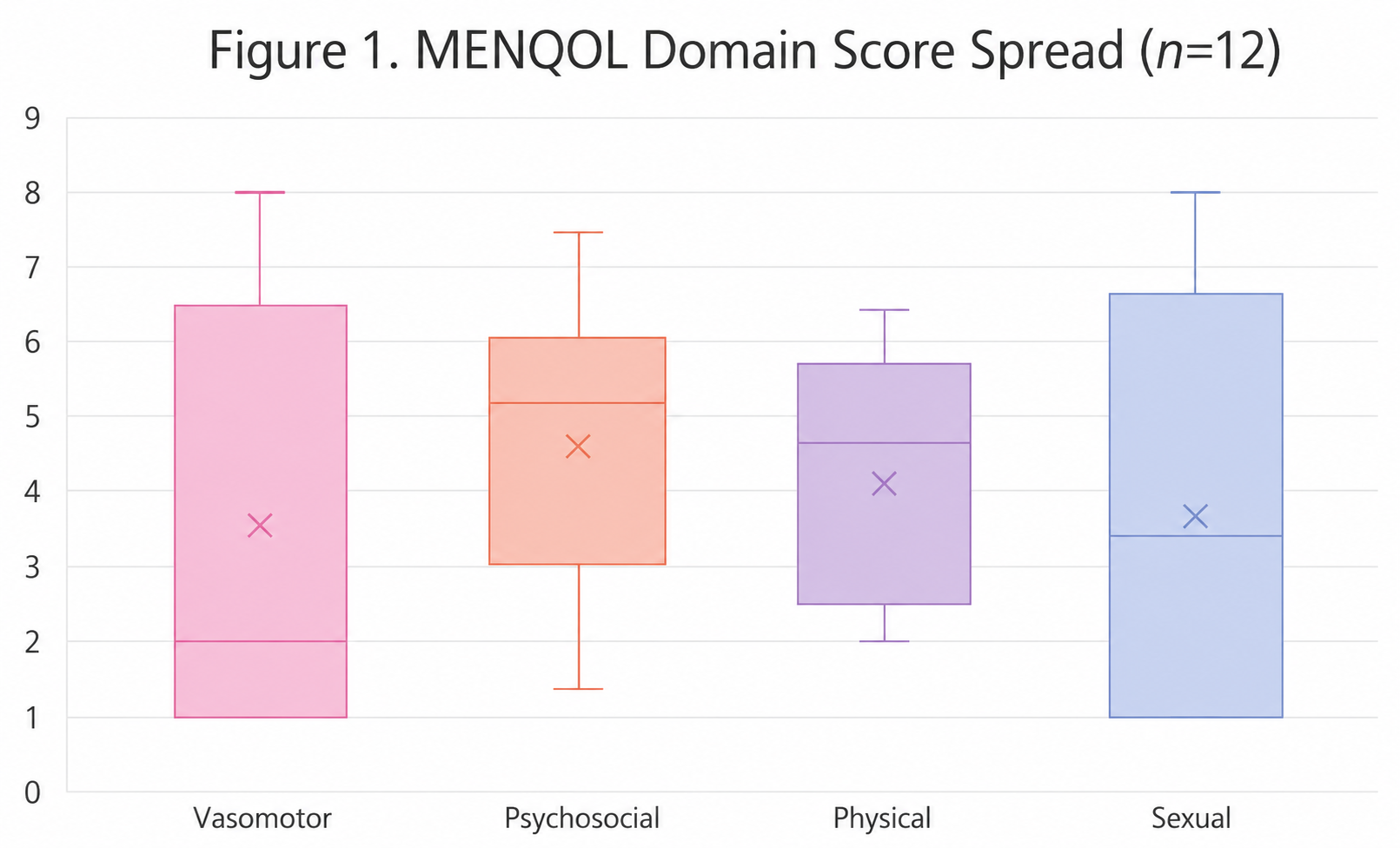
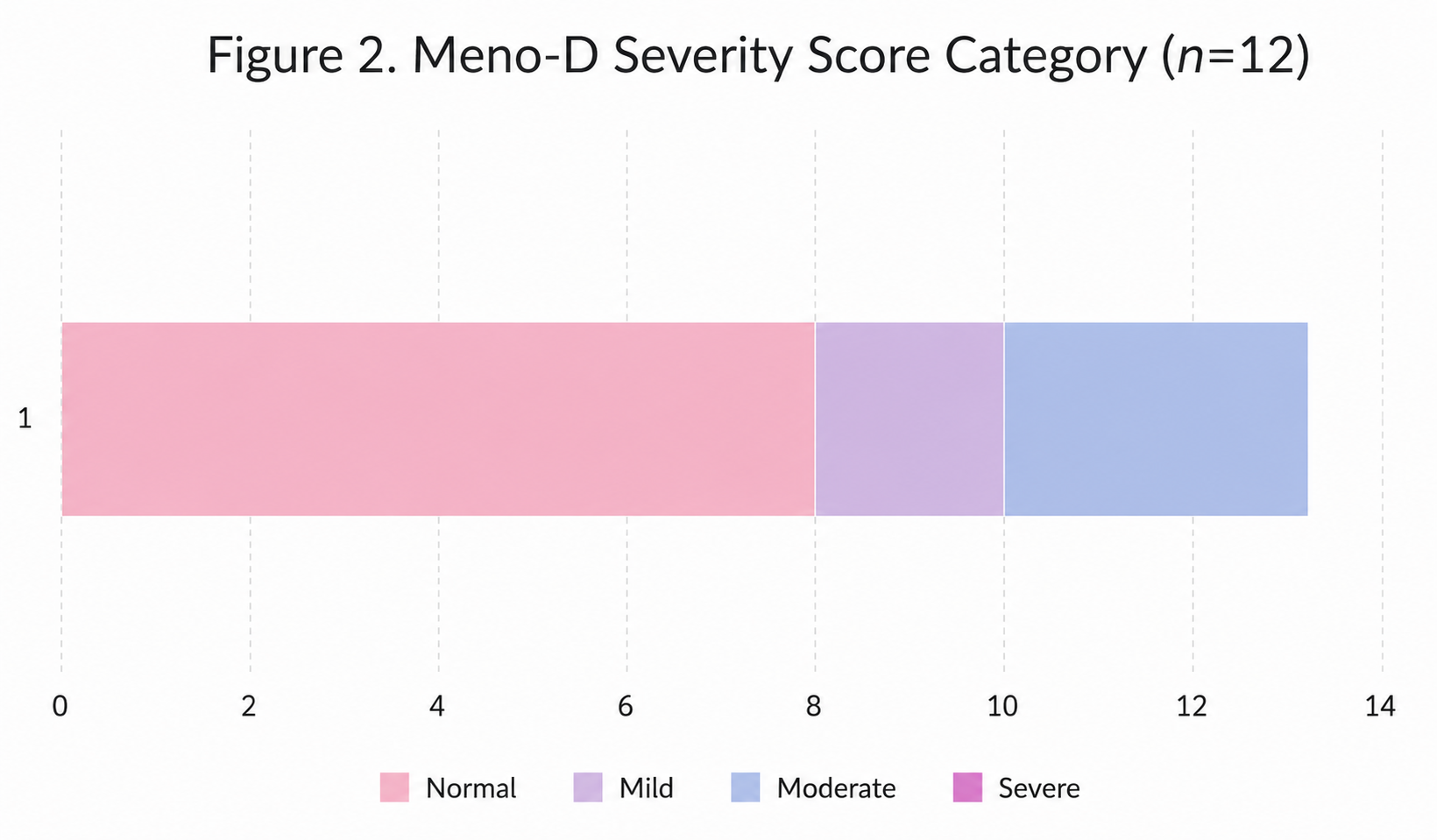
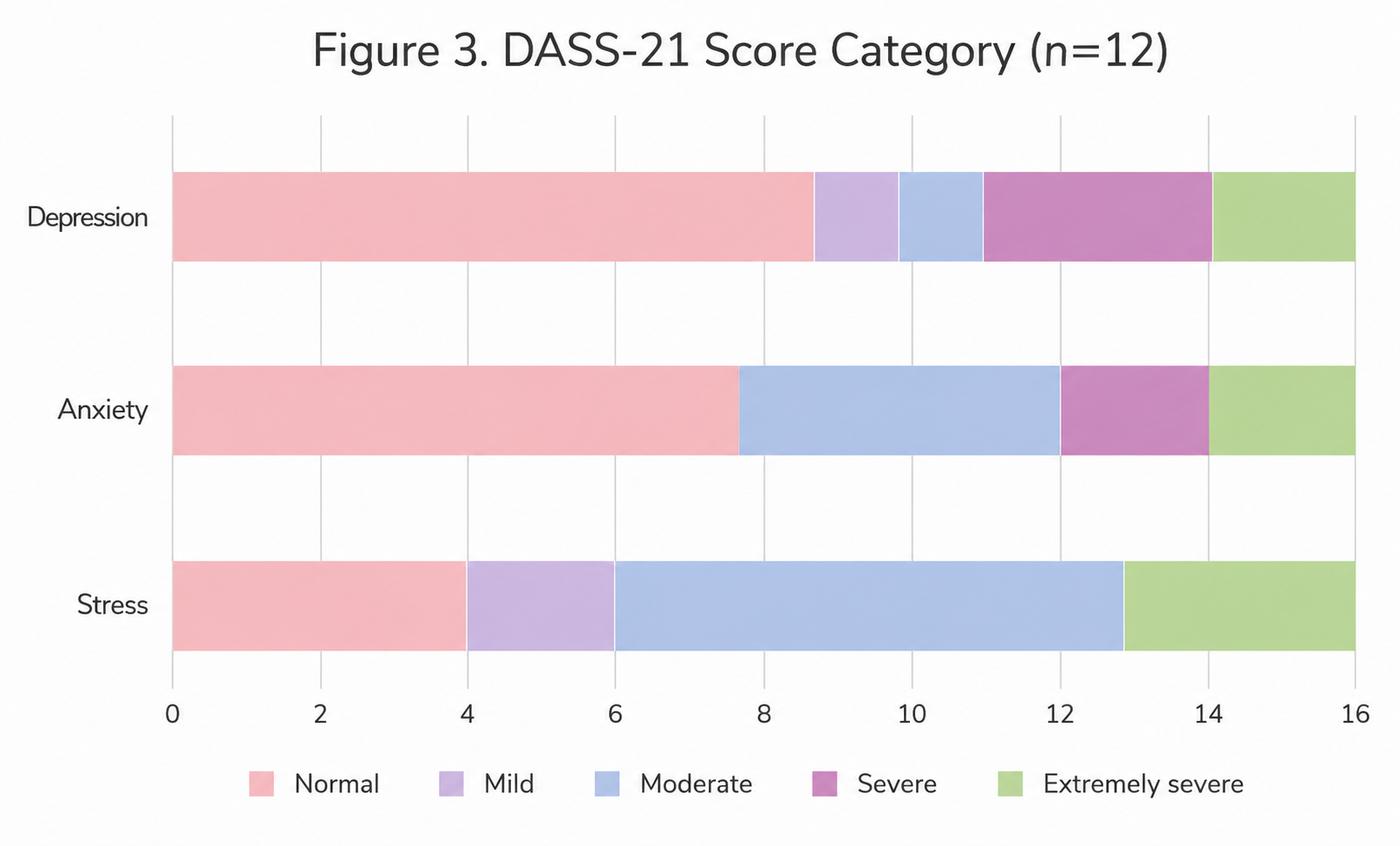
Twelve patients completed baseline mental health questionnaires. MENQOL domain score spreads are shown in Figure 1. Meno-D scores ranged between normal to moderate (Figure 2). In the DASS-21, the majority of respondents scored in the 'moderate' to 'extremely severe' for stress symptoms (Figure 3). Of the 12 patients who completed the baseline questionnaire, 5 were treatment naive, 4 were receiving high-dose transdermal oestradiol, 2 the combined oral contraceptive pill, and 1 unknown.
These results suggest a higher burden of psychological distress in patients with POI. It supports the importance of early screening and multidisciplinary care with psychology/psychiatry in POI management. Further data are required to better describe factors that contribute to psychological wellbeing in this cohort.
- Tian Y, Zhang X, Xin Z, Li CR, Zhang F, Deng H, Yang X. Premature Ovarian Insufficiency Is Associated with Increased Risk of Depression, Anxiety, and Poor Life Quality: A Systematic Review and Meta-analysis. Alpha Psychiatry. 2024 Mar 1;25(2):132-141. doi: 10.5152/alphapsychiatry.2024.231501. PMID: 38798816; PMCID: PMC11117423.
- Hilditch JR, Lewis J, Peter A, van Maris B, Ross A, Franssen E, Guyatt GH, Norton PG, Dunn E. A menopause-specific quality of life questionnaire: development and psychometric properties. Maturitas. 1996 Jul;24(3):161-75. doi: 10.1016/s0378-5122(96)82006-8. Erratum in: Maturitas 1996 Nov;25(3):231. PMID: 8844630.
- Kulkarni J, Gavrilidis E, Hudaib AR, Bleeker C, Worsley R, Gurvich C. Development and validation of a new rating scale for perimenopausal depression-the Meno-D. Transl Psychiatry. 2018 Jun 28;8(1):123. doi: 10.1038/s41398-018-0172-0. PMID: 29955034; PMCID: PMC6023883.
- Lovibond, SH, Lovibond, PF. Manual for the Depression Anxiety Stress Scales. (2nd. Ed.) 1995. Sydney: Psychology Foundation.