The influence of antenatal betamethasone on neonatal cortisol in cord blood: a sub-study of the PRECeDe Pilot Trial (#483)
Background
Antenatal corticosteroid therapy (ACT) has established efficacy in preventing neonatal respiratory morbidity. Whilst neonatal metabolism is influenced by the intrauterine environment, there is currently no consensus on both the short- and long-term effects of ACT on neonatal cortisol metabolism including the influence of exposure on neonatal cortisone and cortisol levels. This sub-study of a pilot clinical trial investigated the differences in cortisol metabolism in neonates exposed to antenatal betamethasone compared to placebo.
Methods
Umbilical cord plasma samples were taken from neonates born to participants of the PRECeDe Pilot Trial who were randomised to receive either betamethasone or matched saline placebo within 7 days prior to their planned elective caesarean section. Mass spectrometry was used to detect cortisol and cortisone levels in cord plasma samples. Statistical analyses of steroid concentrations were undertaken using R Studio statistical program.
Results
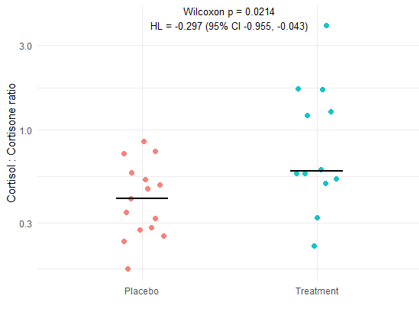
Of the 27 samples collected throughout the trial, 12 samples were obtained from neonates in the treatment (betamethasone) group, and 15 from the placebo. Cortisol concentrations were lower in cord plasma from the treatment group (mean: 48.9 nmol/L; SD = 51.8) compared to the placebo group (mean = 96.9 nmol/L; SD = 56.0). Treatment was associated with a lower geometric mean cortisol (adjusted GMR treatment vs placebo 0.33, 95% CI 0.18–0.63; p = 0.002). The cortisol: cortisone ratio was also lower in the treatment group (Hodges–Lehmann difference Treatment − Placebo −0.30, 95% CI −0.95 to −0.04; p = 0.021).
Conclusion
Neonates who were exposed to ACT had significantly lower baseline cortisol levels and a lower cortisol: cortisone ratio in our pilot study. These findings may indicate altered neonatal cortisol physiology; however, the clinical implications and duration of these changes require further investigation.