Title: Effect of aromatase inhibitor therapy on cardiometabolic outcomes in patients with breast cancer (#382)
 Aim: Aromatase inhibitors (AIs) are the cornerstone of adjuvant therapy for hormone receptor-positive breast cancer (1). As breast cancer survivorship improves, the cardiometabolic effects of AI therapy are increasingly important. This study aimed to characterise baseline cardiometabolic health and assess the impact of AI therapy on cardiometabolic parameters in patients treated at tertiary hospital in Sydney.
Methods: A retrospective analysis was conducted of epidemiological and cardiometabolic data from breast cancer patients treated with aromatase inhibitors who attended the Cancer Endocrinopathy Clinic between 2020 and 2025. Deceased patients were excluded.
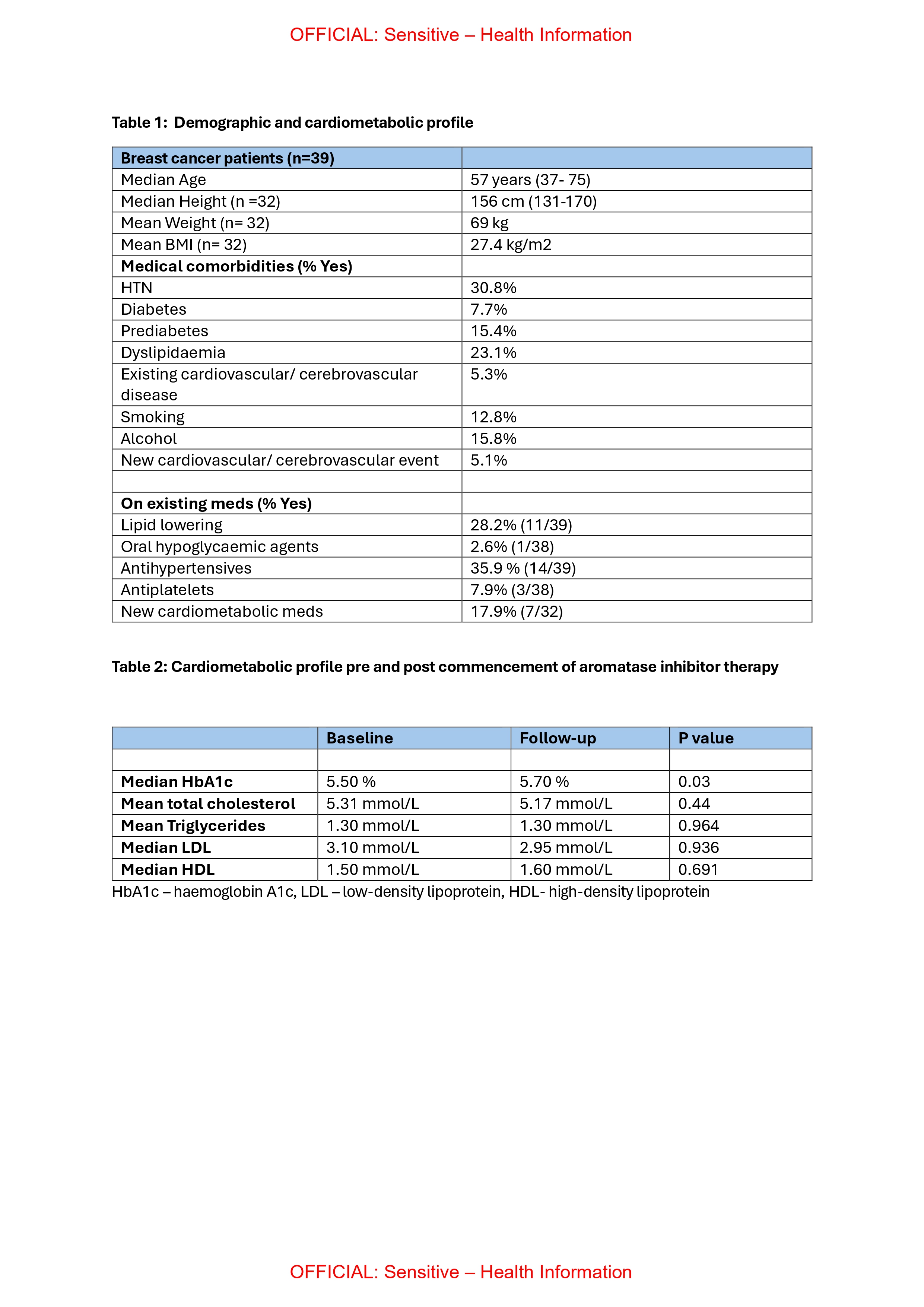
Results: Among 39 breast cancer patients treated with an aromatase inhibitor, the median age was 57 years, mean weight 69 kg, and mean BMI 27.4 kg/m². At baseline, 38.5% had hypertension, 23.1% dyslipidaemia, 15.4% prediabetes, 7.7% diabetes, and 5.3% a prior cardiovascular or cerebrovascular event; 12.8% smoked and 15.8% consumed alcohol. Lipid-lowering and antihypertensive therapies were used by 28.2% and 35.9% of patients, respectively (Table 1). Following aromatase inhibitor initiation, HbA1c increased modestly (5.5% vs 5.7%, p = 0.03), while lipid parameters remained unchanged, including total cholesterol (p = 0.444), triglycerides (p = 0.964), LDL cholesterol (p = 0.936), and HDL cholesterol (p = 0.691) (Table 2). Despite stable lipid profiles, 5.1% experienced a new cardiovascular or cerebrovascular event and 17.9% commenced new cardiovascular medication during treatment.
Conclusion: Aromatase inhibitor therapy was associated with a modest increase in HbA1c, while lipid parameters remained stable. These findings may reflect the relatively short and variable follow-up period, which is insufficient to capture the longer-term emergence of endocrine therapy related metabolic complications. (2). Alternatively, stable cardiometabolic profiles may indicate effective proactive surveillance and management during therapy. Larger studies with longer follow-up are needed to clarify the metabolic impact of AI and to determine whether proactive surveillance mitigates these risks.
- 1. Khosrow-Khavar F, Filion KB, Bouganim N, Suissa S, Azoulay L. Aromatase inhibitors and the risk of cardiovascular outcomes in women with breast cancer: a population-based cohort study. Circulation. 2020;141(7):549-59.
- 2. Rillamas-Sun, E., Kwan, M. L., Iribarren, C., Cheng, R., Neugebauer, R., Rana, J. S., Nguyen-Huynh, M., Shi, Z., Laurent, C. A., Lee, V. S., Roh, J. M., Huang, Y., Shen, H., Hershman, D. L., Kushi, L. H., & Greenlee, H. (2023). Development of cardiometabolic risk factors following endocrine therapy in women with breast cancer. Breast cancer research and treatment, 201(1), 117–126. https://doi.org/10.1007/s10549-023-06997-x