Thyrotoxic periodic paralysis complicated by carbimazole-associated myositis (#426)
Thyrotoxic periodic paralysis (TPP) is a rare complication of hyperthyroidism causing acute hypokalaemic weakness through a transcellular potassium shift, disproportionately affecting Asian men1. Carbimazole-induced myositis is a separate, even rarer complication of antithyroid therapy, also reported predominantly in Asian patients2.
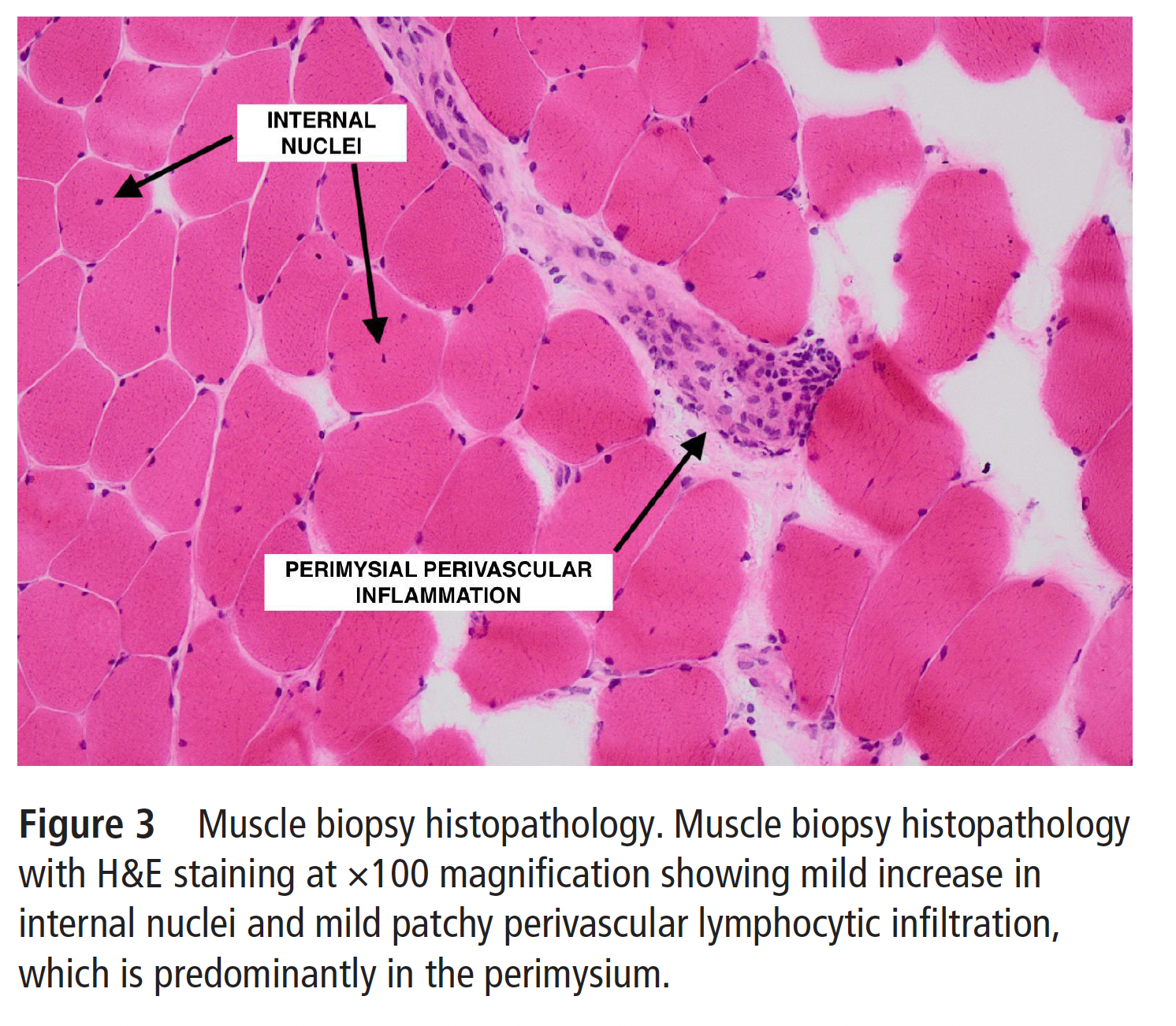
We present a man in his 30s of East Asian background with acute generalised limb weakness after strenuous exercise and a high-carbohydrate meal, found to have profound hypokalaemia (1.9 mmol/L) and biochemical thyrotoxicosis confirming TPP secondary to Graves' disease, resolving promptly with intravenous potassium. Three months after starting carbimazole, he developed myalgia with creatine kinase elevation but no weakness. Myositis antibody panel was negative and muscle biopsy showed nonspecific myopathic change with minimal lymphocytic infiltration (see Figure 1). Symptoms and creatine kinase normalised after switching from carbimazole to propylthiouracil, supporting presumptive carbimazole-induced myositis1,2,3. Genetic testing for skeletal muscle channelopathies, including Kir2.6, was negative.
TPP arises from thyroid hormone-driven upregulation of Na⁺/K⁺-ATPase, compounded in susceptible individuals by Kir2.6 mutations reducing potassium efflux3. Acute management centres on cautious potassium replacement, with intravenous therapy giving faster recovery than oral and monitoring required for rebound hyperkalaemia. Non-selective beta-blockade is a useful adjunct when unresponsive to potassium alone4. Carbimazole-induced myositis typically arises within one week to three months of treatment, with reported strategies including dose reduction, cessation, or switching to propylthiouracil5.
To our knowledge, this is the first reported case of TPP followed by presumed carbimazole-induced myositis in the same patient, underscoring the need for prompt recognition of new muscle symptoms in patients on antithyroid therapy.
Figure 1
- 1. Lam L, Nair RJ, Tingle L. Thyrotoxic periodic paralysis. Proc Bayl Univ Med Cent 2006;19:126–9.
- 2. Suzuki S, Ichikawa K, Nagai M, et al. Elevation of serum creatine kinase during treatment with antithyroid drugs in patients with hyperthyroidism due to Graves disease. A novel side effect of antithyroid drugs. Arch Intern Med 1997;157:693–6.
- 3. Ryan DP, da Silva MRD, Soong TW, et al. Mutations in potassium channel Kir2.6 cause susceptibility to thyrotoxic hypokalemic periodic paralysis. Cell 2010;140:88–98.
- 4. Chang C-C, Cheng C-J, Sung C-C, et al. A 10-year analysis of thyrotoxic periodic paralysis in 135 patients: focus on symptomatology and precipitants. Eur J Endocrinol 2013;169:529–36.
- 5. Page SR, Nussey SS. Myositis in association with carbimazole therapy. Lancet. 1989;1:964.