Characterising male factor infertility, comorbidity burden, and ICSI outcomes in a public fertility centre: a retrospective cohort study (#391)
Male factor infertility contributes to up to half of cases of couple infertility (1). It is increasingly recognised that male reproductive health status reflects broader somatic health, with infertile men carrying a higher comorbidity burden than their fertile peers (2). Australian data linking comorbidity burden with semen parameters remain scarce. We aimed to characterise causes of male infertility, comorbidity burden and its association with semen parameters, and intracytoplasmic sperm injection (ICSI) outcomes in a Victorian public fertility cohort.
We retrospectively analysed 281 men undergoing ICSI at Victoria's Public Fertility Service, Royal Women's Hospital from July 2023 until May 2024. Demographics, semen parameters, ICSI cycle outcomes and attributable causes were extracted from medical records. Comorbidity burden was quantified using the Charlson Comorbidity Index (CCI). Continuous variables were summarised as medians (IQR), categorical as frequencies. Associations were assessed by variable type: Spearman correlation for continuous CCI, Kruskal–Wallis across CCI groups, and chi-square or Fisher's exact for categorical variables (p < 0.05).
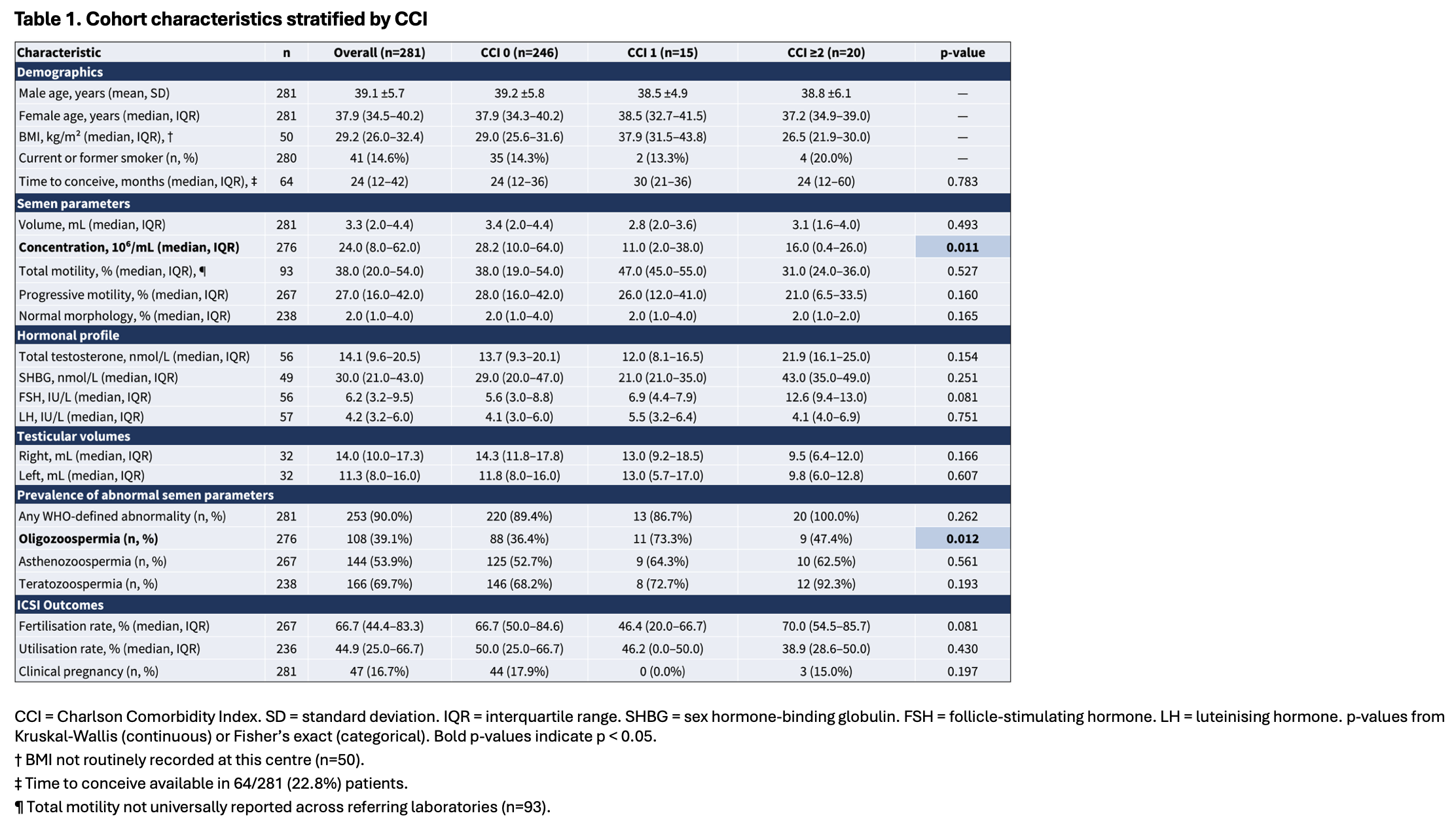
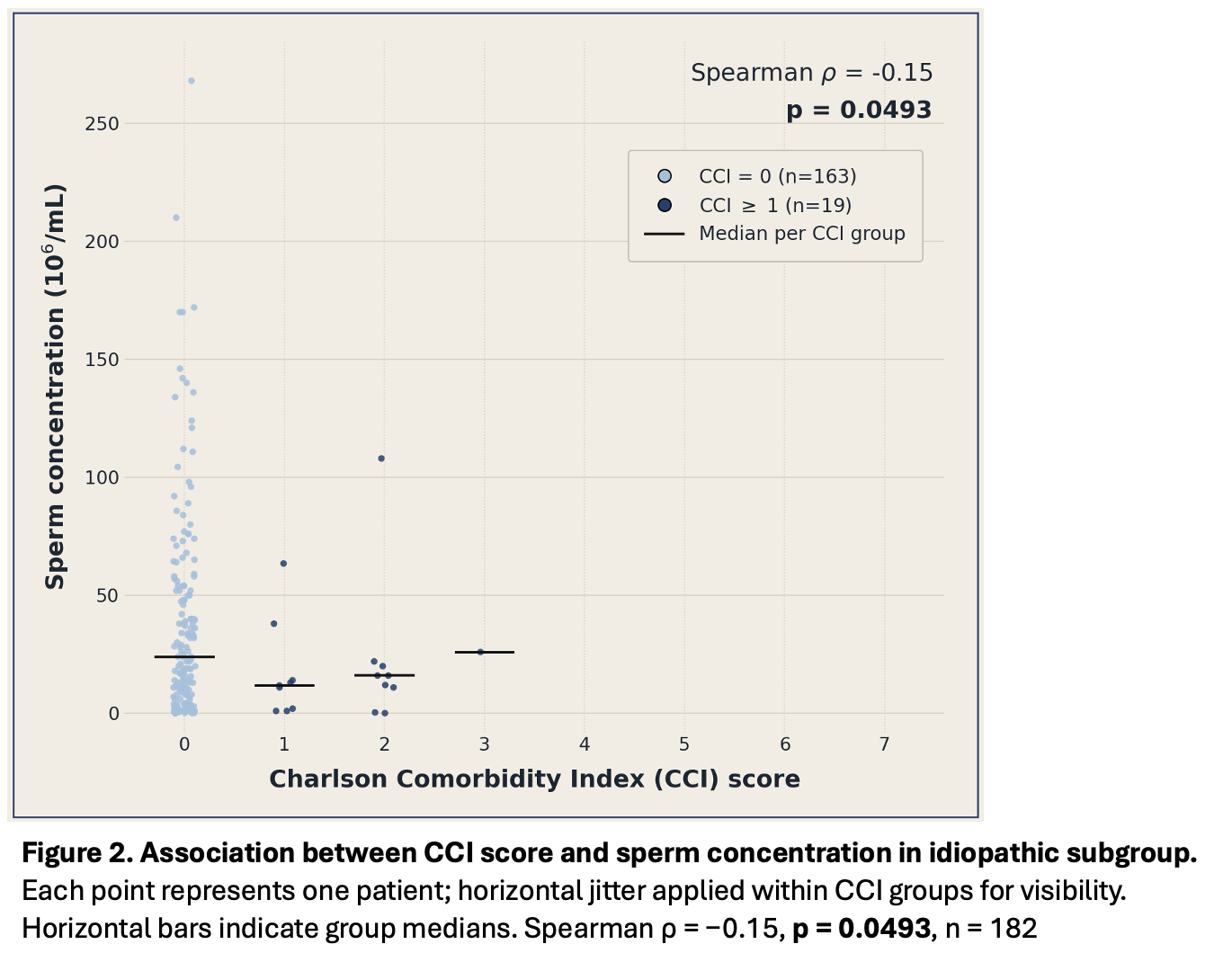
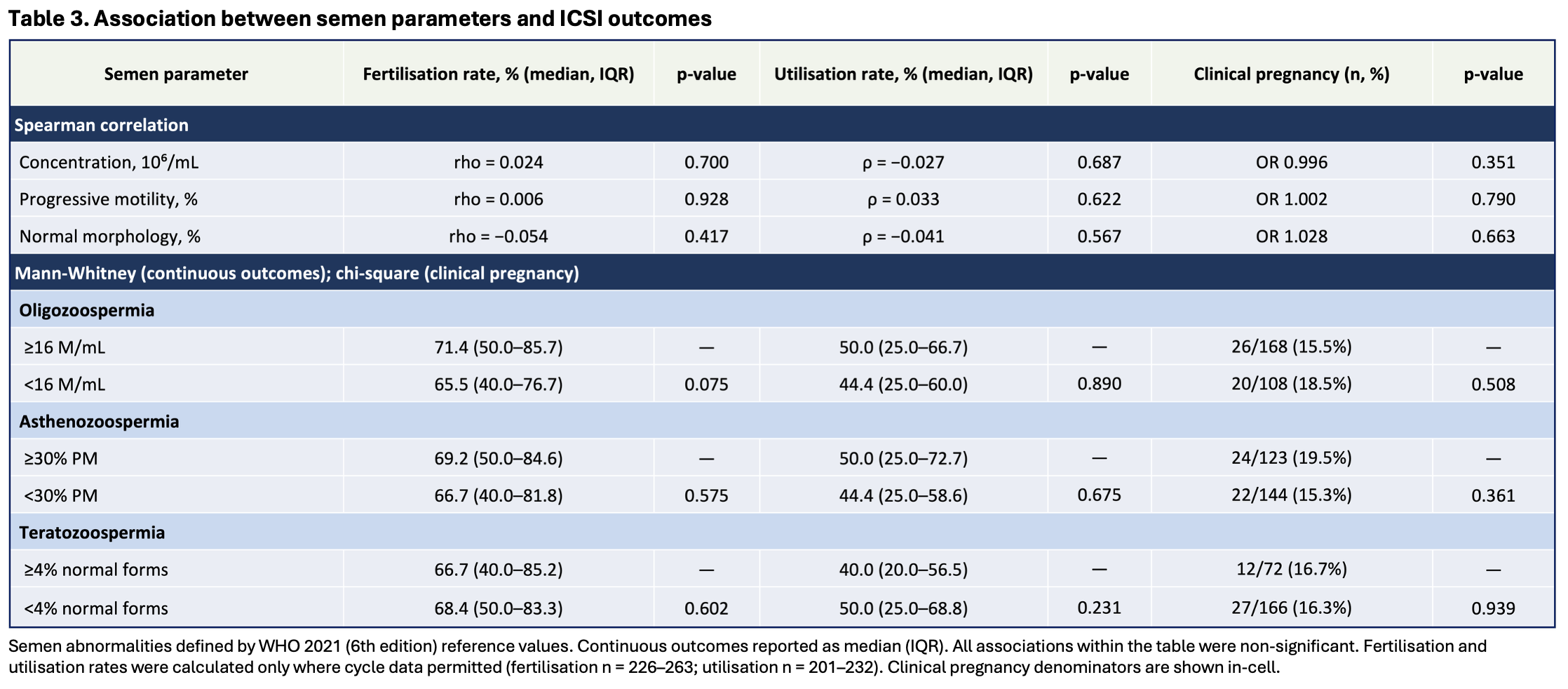
Mean age was 39.1 years; infertility was most commonly idiopathic (65.1%), with ≥1 WHO-defined semen abnormality in 253 men (90.0%) and oligozoospermia in 108 (39.1%). Comorbidity burden was low (87.5% CCI=0; hypertension most prevalent, 5.0%). Higher CCI was inversely associated with sperm concentration (p=0.011, Table 1); however, this association was attenuated within the idiopathic subgroup (n=182, p=0.0493, Figure 1). Fertilisation differed across concentration severity groups (p=0.035, Table 2), but not with motility or morphology . The clinical pregnancy rate was 16.7%.
Overall, comorbidity burden was significantly associated with sperm concentration, consistent with published literature suggesting spermatogenic impairment reflects broader somatic health. This association remained significant, albeit weakened, in idiopathic infertility, where mechanisms remain unclear. Sperm concentration severity, but not morphology or motility, predicted fertilisation. Future studies should further explore relationship between spermatogenic function and broader somatic health, and underlying pathophysiology.