Metastatic breast cancer and bone characteristics (#390)
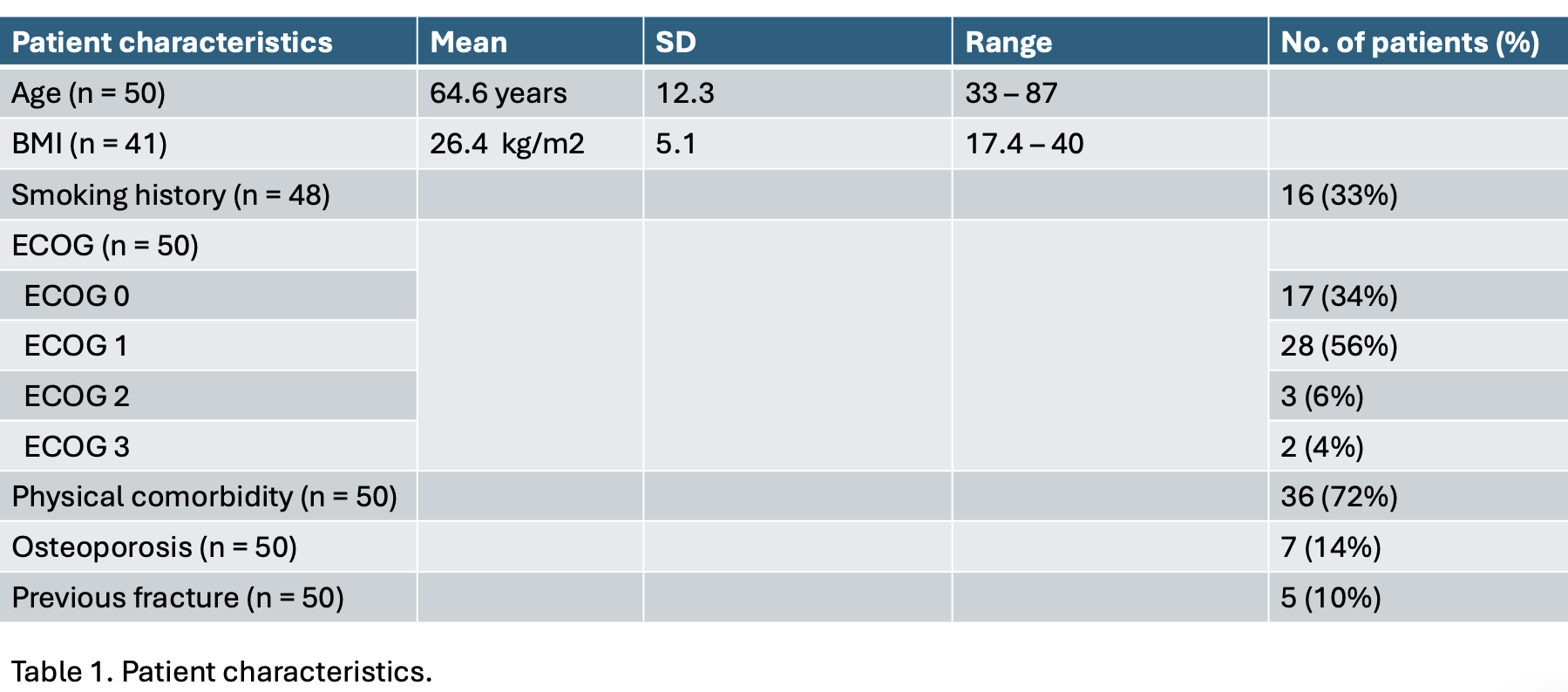
Aims: Guidelines exist for bone health management in early and locally advanced breast cancer (1,2). No guidance is available for metastatic breast cancer. This retrospective observational study evaluates bone health characteristics and monitoring in women with metastatic breast cancer on endocrine therapy within a Victorian public health service.
Methods: Adult women with metastatic breast cancer treated as an outpatient at Monash Health with endocrine therapy were included. Collected data include personal characteristics, disease and treatment characteristics, bone metabolism biochemistry, dual-energy X-ray absorptiometry (DXA) results and adverse skeletal events. Descriptive statistics were used for analysis.
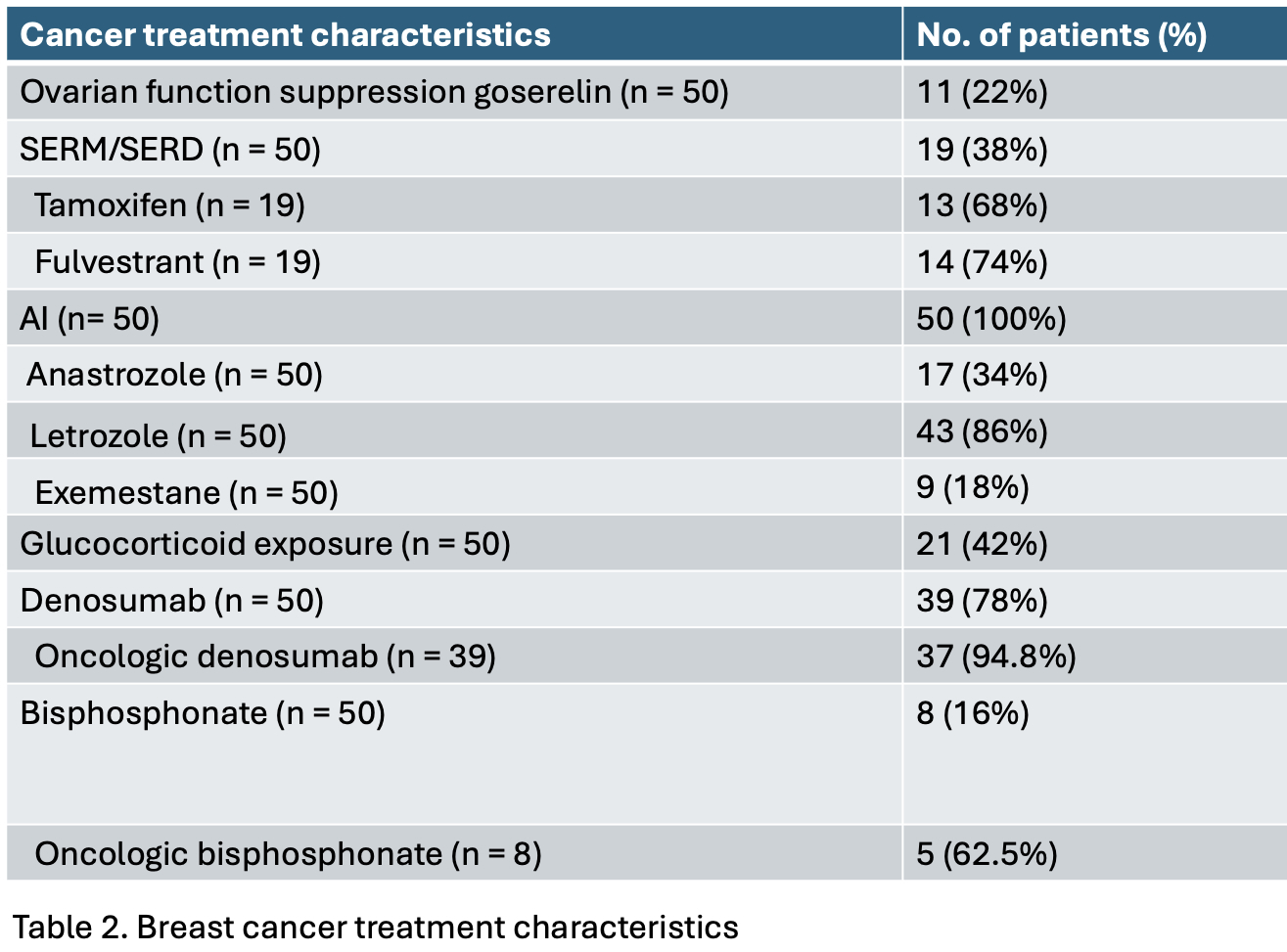
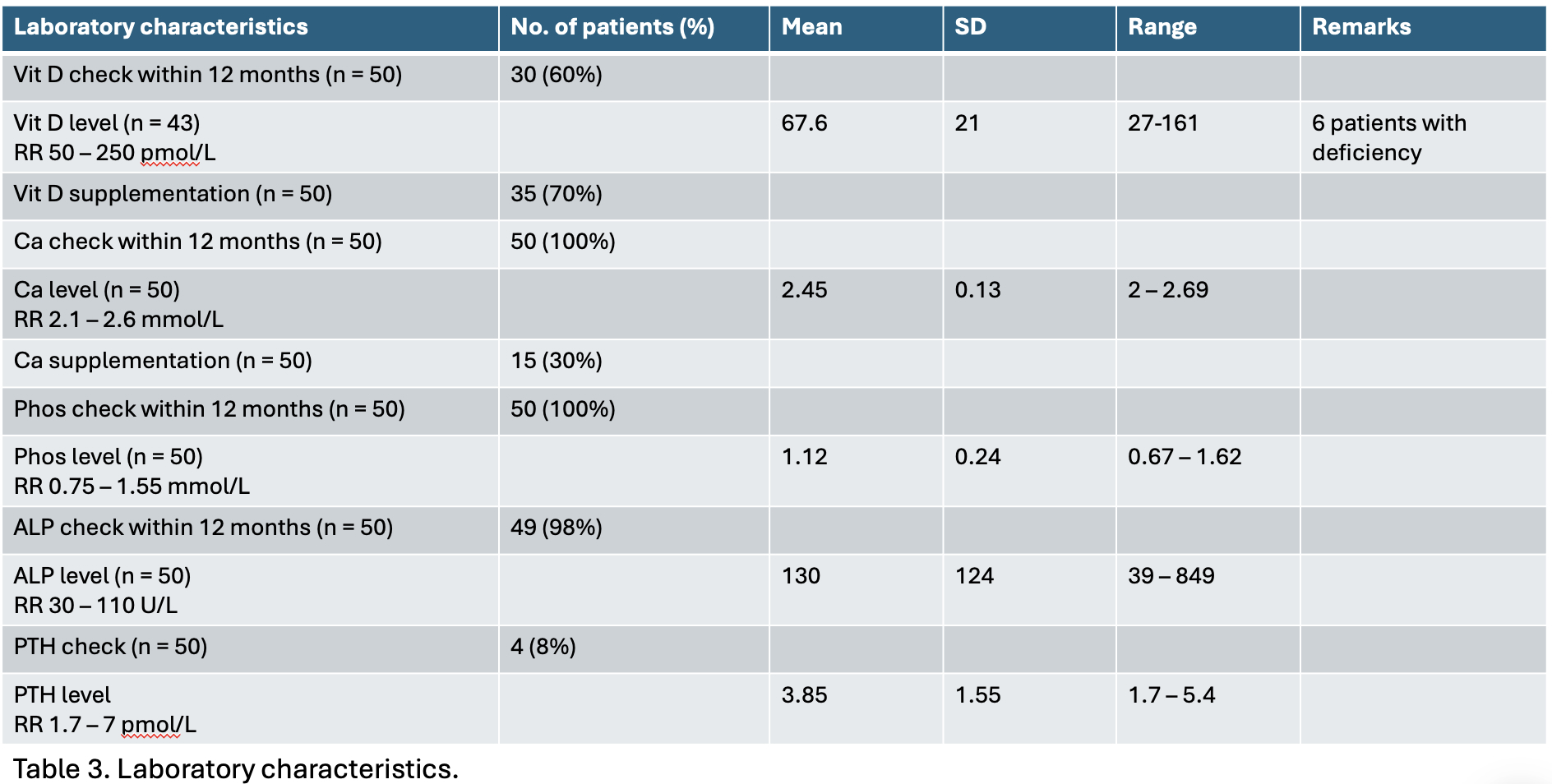
Results: Of 50 women evaluated, 14% had osteoporosis and 10% had a previous fracture. Median treatment duration was 62 months. All women received aromatase inhibitors, 38% were treated with a selective oestrogen receptor modulator or downregulator and 22% received ovarian function suppression. Denosumab was used in 78% of women (94.8% at oncologic dose); bisphosphonates in 16% (62.5% at oncologic dose). Vitamin D deficiency was at 12%; vitamin D level was checked within the last 12 months in 60% of women. Calcium, phosphate and alkaline phosphatase levels were well monitored (98% to 100% within the last 12 months). Baseline DXA was performed in 48% of women, with only one-third having follow-up DXAs performed over a mean of 30 months. Six women with osteoporosis/osteopenia did not receive follow-up DXA, two women were not on bone modifying agents. One case of osteonecrosis of the jaw occurred with monthly denosumab 120mg for 20 months, and one case of hypocalcaemia occurred with denosumab 60mg in the setting of vitamin D deficiency.
Conclusion: Vitamin D monitoring can be improved in women on endocrine therapy and bone modifying agents. Follow-up of low bone mineral density on DXA should be enhanced, particularly in women on endocrine therapy without bone modifying agents.
- 1. Grossmann M, Ramchand SK, Milat F, et al. Assessment and management of bone health in women with oestrogen receptor-positive breast cancer receiving endocrine therapy: position statement summary. Med J Aust. 2019 Sep;211(5):224-229. doi: 10.5694/mja2.50280. 2. Hadji P, Aapro M, Al-Dagri N, et al. Management of aromatase inhibitor-associated bone loss (AIBL) in women with hormone-sensitive breast cancer: An updated joint position statement of the IOF, CABS, ECTS, IEG, ESCEO, IMS, and SIOG. J Bone Oncol. 2025 Jun 11;53:100694. doi: 10.1016/j.jbo.2025.100694.