Refractory hypocalcaemia from osteoblastic bone disease in the setting of metastatic prostate cancer and denosumab administration (#455)
Symptomatic hypocalcaemia is uncommon, occurring in <2% of patients with malignancy (1) with the main contribution from osteoblastic bone disease. Treatment with receptor activator of nuclear factor-kappa B ligand (RANKL) inhibitor (denosumab) is standard therapy for skeletal metastasis as it is associated with reductions in adverse skeletal-related events including pathological fractures, spinal cord compression and hypercalcaemia (2).
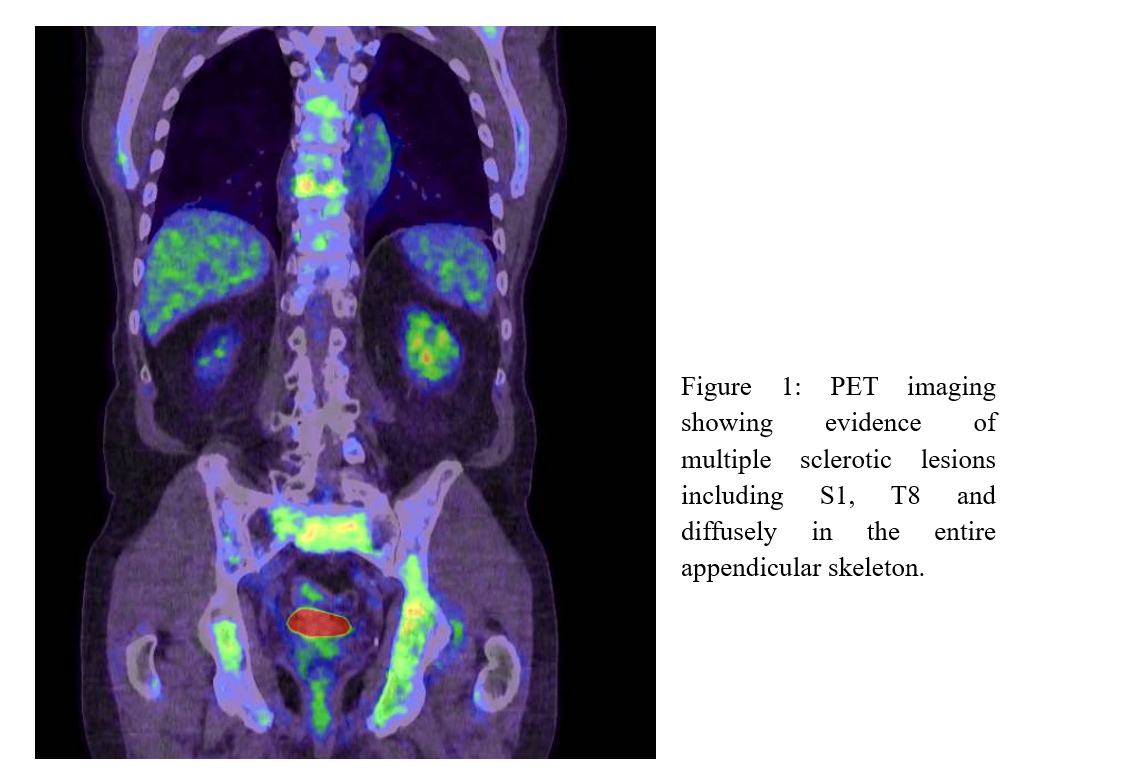
A case is presented of severe refractory hypocalcaemia in the setting of metastatic prostate cancer and RANKL therapy administration. The patient is a 72-year-old male with a new diagnosis of metastatic prostate cancer with extensive skeletal metastasis (figure 1) which was initially managed surgically with bilateral orchidectomy and medically with degaralix and denosumab.
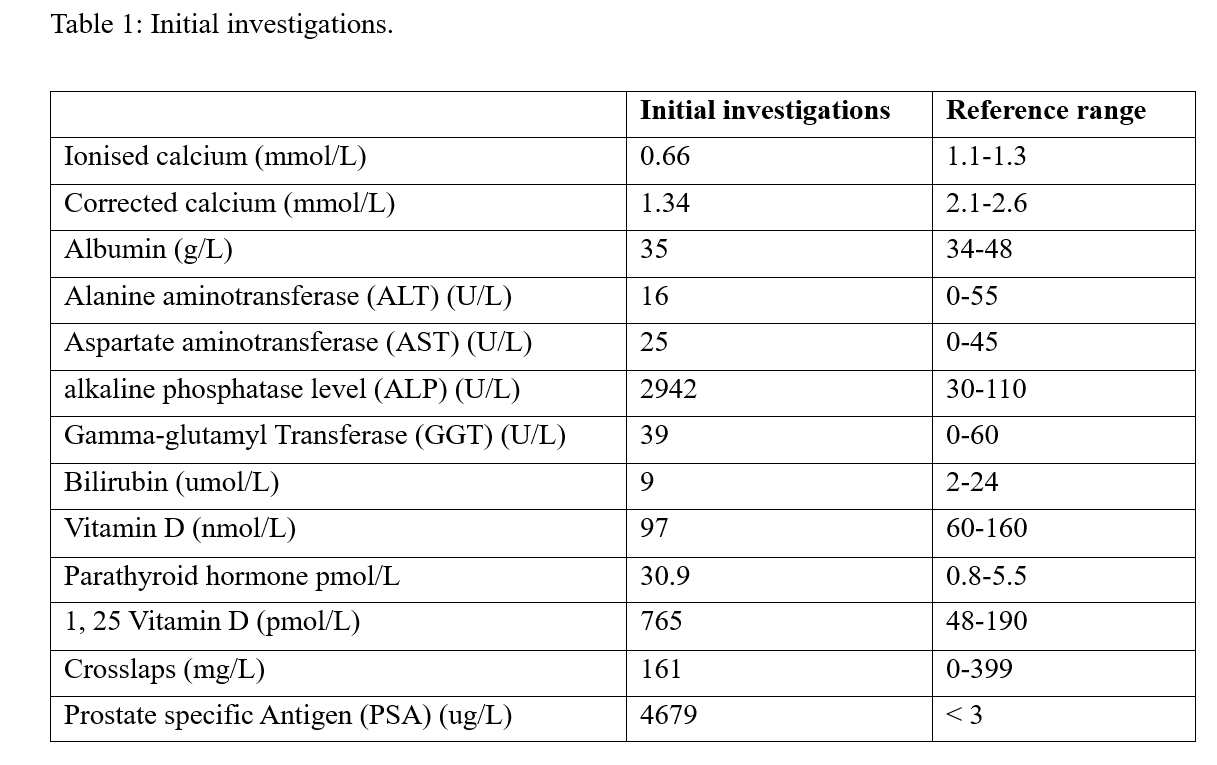
Two weeks following administration of denosumab he presented with neuromuscular irritability (paraesthesia and myoclonus) and was found to have severe hypocalcaemia (ionised calcium of 0.66 mmol/L (RR 1.1-1.3), corrected calcium of 1.34 mmol/L (RR 2.1-2.6)) and a significantly elevated alkaline phosphatase level (ALP) of 2942 U/L (RR 30-110) with isoenzymes showing distribution of 97% bone and 3% liver and parathyroid hormone (PTH) of 30.9 pmol/L (Table 1).
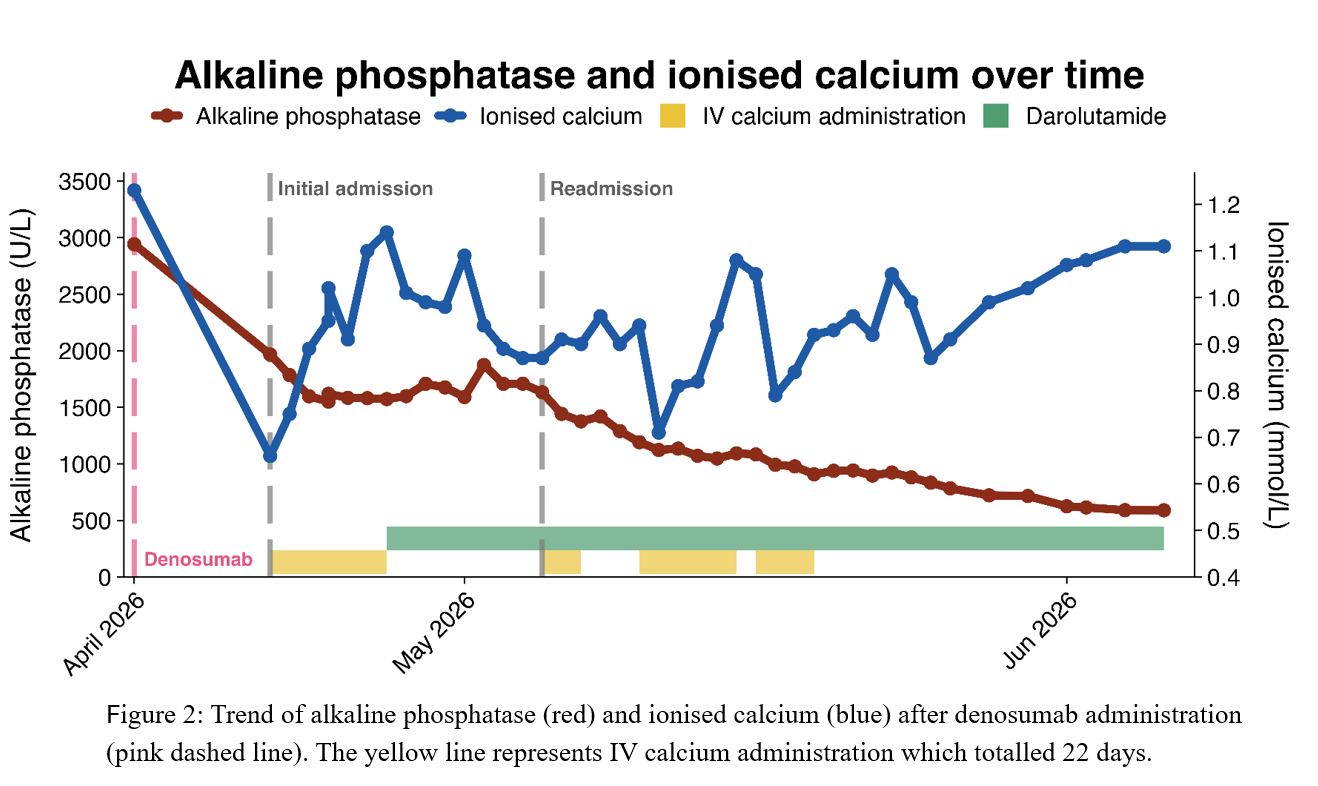
He required several admissions with treatment resistant hypocalcaemia requiring 22 days total of continuous intravenous (IV) calcium infusion with concurrent calcitriol and calcium carbonate. To further manage his malignancy, he was given anti-androgen therapy, darolutamide with improvement in ALP and hypocalcaemia (figure 1).
This case represents the rare but severe sequala of osteoblastic bone disease with standard therapy of denosumab for management of skeletal metastasis. This treatment can lead to severe and potentially life-threatening hypocalcaemia that poses the relevant question of whether denosumab treatment should be delayed to allow initial treatment of the underlying malignancy.
- 1. Zeng W, Swee DS. Severe and refractory hypocalcaemia secondary to osteoblastic bone metastases in bladder signet ring carcinoma: A case report and literature review. Medicine (Baltimore). 2022;101(26):e29731.
- 2. Jakob T, Tesfamariam YM, Macherey S, Kuhr K, Adams A, Monsef I, et al. Bisphosphonates or RANK‐ligand‐inhibitors for men with prostate cancer and bone metastases: a network meta‐analysis. Cochrane Database of Systematic Reviews. 2020(12).
