Surgical versus medical management of macroprolactinomas in adolescents: a systematic review (#404)
Aims
Prolactinomas are the most common functioning pituitary adenomas, with macroprolactinomas (≥10 mm) posing particular challenges due to mass effect and hyperprolactinaemia (1). Dopamine agonists (DA) are recommended first-line therapy in adolescents, with surgery generally reserved for DA resistance or intolerance (2). Adolescents represent a unique subset where hyperprolactinaemia can disrupt pubertal development and years of pharmacotherapy raise concerns about adherence and quality of life. This study compares the efficacy of surgical versus medical management in adolescent patients with macroprolactinomas.
Methods
MEDLINE, Embase, Cochrane and Pubmed databases were searched from inception to April 2023. Studies involving adolescents aged 12-20 years with macroprolactinomas undergoing surgical and/or medical management were eligible. Single case reports were excluded. The primary outcome was prolactin normalisation. Secondary outcomes included reduction in prolactin levels, tumour shrinkage and symptom improvement.
Results
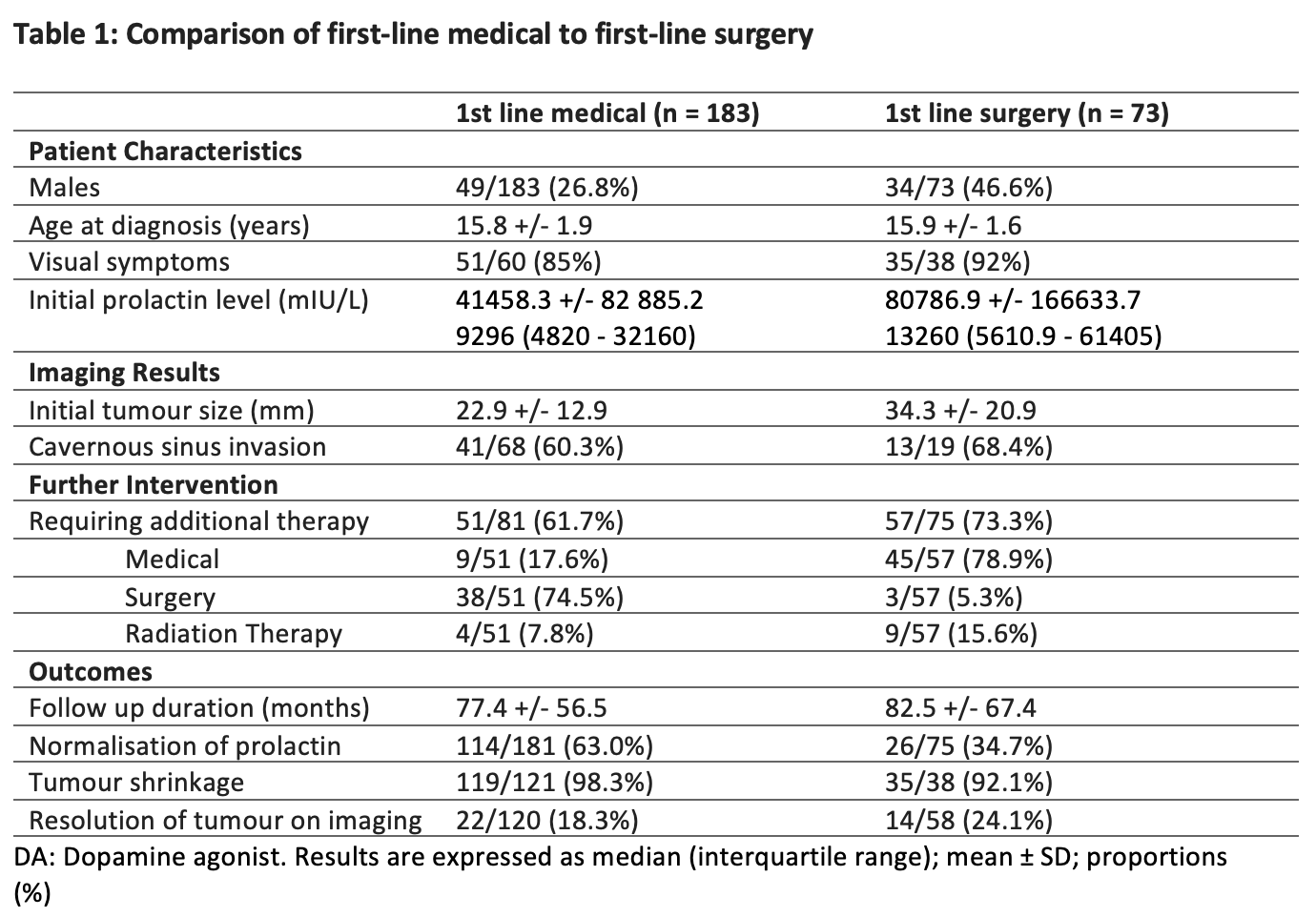
Thirty-two studies involving 256 adolescents met the inclusion criteria, including 173 females (68%) and 83 males (32%). First-line dopamine agonist therapy was used in 183 patients (71%), while 73 (29%) underwent first-line surgery. Patients undergoing first-line surgery had substantially larger tumours (34.3 vs 22.9 mm) and higher baseline prolactin concentrations (80786.9 vs 41458.3 mIU/L). Prolactin normalisation occurred in 63% of first-line medically treated patients compared to 34.7% of first-line surgically treated patients. Tumour shrinkage occurred in >90% of patients regardless of treatment modality, however complete radiological resolution was uncommon (18.3% in first-line medical vs 24.1% in first-line surgery). Additional therapy was required in over 60% of patients irrespective of initial treatment strategy.
Conclusion
Adolescents with macroprolactinomas frequently require multiple treatment modalities to achieve disease control. Apparently superior biochemical outcomes with first-line dopamine agonist therapy should be interpreted cautiously, as patients undergoing surgery present with substantially larger tumours and higher prolactin concentrations at diagnosis. Higher-quality prospective comparative studies are required to determine the optimal initial management strategy.