From rhythm control to hormonal chaos (#405)
A 39-year-old man with idiopathic dilated cardiomyopathy, durable left ventricular assist device (LVAD) support and chronic Pseudomonas LVAD drive-line infection developed progressive amiodarone-induced thyrotoxicosis (AIT) after approximately two years of amiodarone therapy. He presented with heat intolerance, tremor, sweating, disturbed sleep and weight loss, while classical cardiovascular manifestations of thyrotoxicosis were largely masked by LVAD support. Thyroid antibodies were negative, with no goitre or nodularity, favouring type 2 AIT, although mixed disease remained possible.
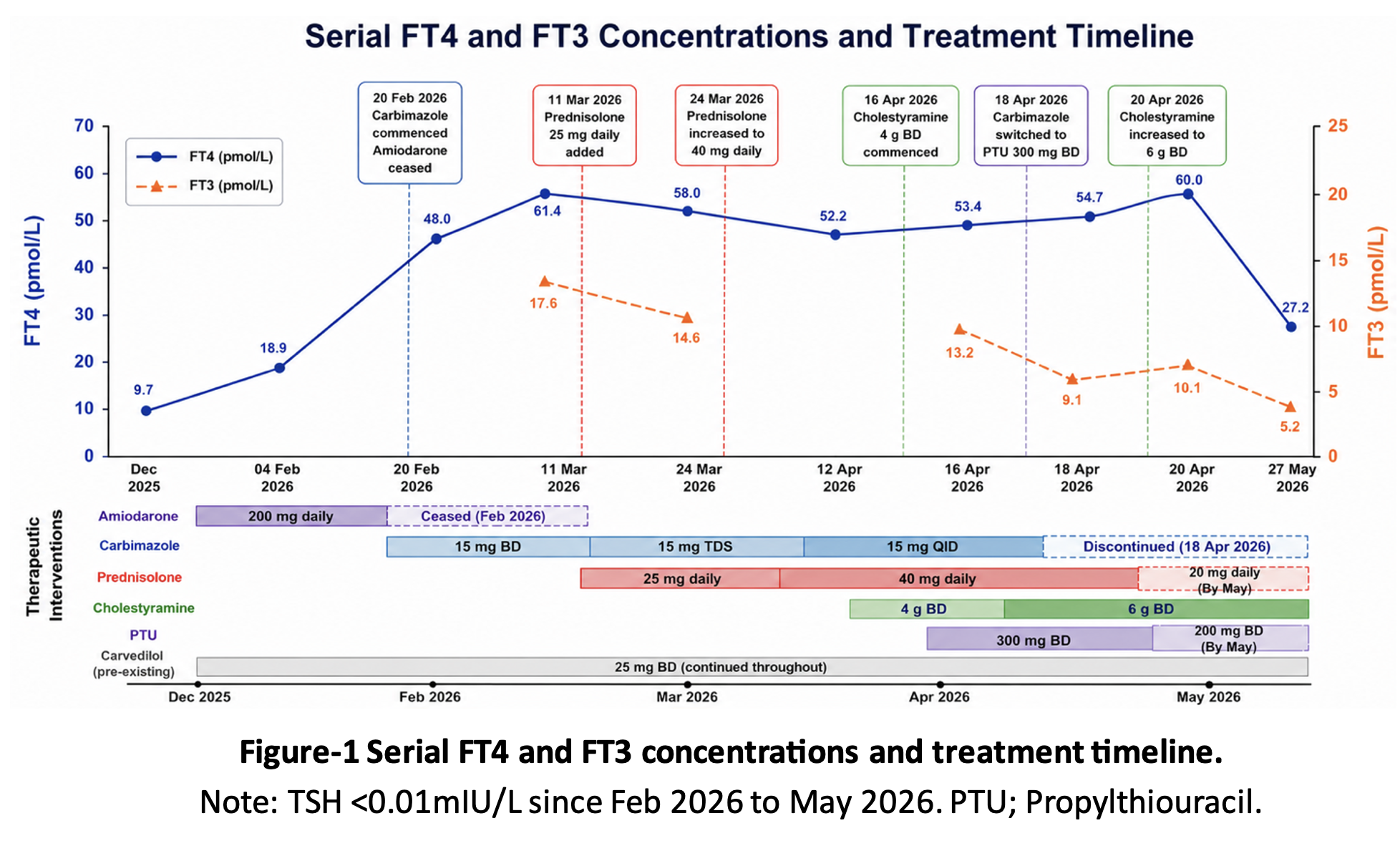
Despite amiodarone cessation, escalating carbimazole therapy and prednisolone 40 mg daily, thyrotoxicosis progressed (peak FT4 61.4 pmol/L, FT3 17.6 pmol/L). Ongoing severe biochemical thyrotoxicosis posed significant cardiovascular risk. Thyroidectomy was considered prohibitively high risk because of LVAD dependence and long-term anticoagulation, while plasmapheresis was not pursued because of concerns regarding haemodynamic instability and extracorporeal volume shifts.
Treatment was intensified with conversion to propylthiouracil (PTU) 300 mg twice daily, continuation of prednisolone and addition of cholestyramine, up titrated to 6 g twice daily. Cholestyramine dosing was carefully separated from anticoagulation, antibiotics and heart failure medications to minimise drug interactions. This resulted in marked biochemical improvement, with FT4 falling by more than 50% and normalisation of FT3, accompanied by improvement in thyrotoxic symptoms, allowing gradual treatment de-escalation (Figure-1).
Amiodarone-induced thyrotoxicosis (AIT) can be refractory despite conventional treatment, particularly in mixed forms. This case highlights the unique challenges of managing AIT in a patient with a durable LVAD, where cardiovascular manifestations may be masked and definitive therapies, including thyroidectomy and plasmapheresis, carry substantial risk. It also demonstrates the value of cholestyramine as an effective adjunctive therapy in treatment-resistant AIT, provided careful attention is given to medication timing in the setting of complex polypharmacy. Management requires balancing biochemical control against infectious, metabolic and cardiovascular risks.